
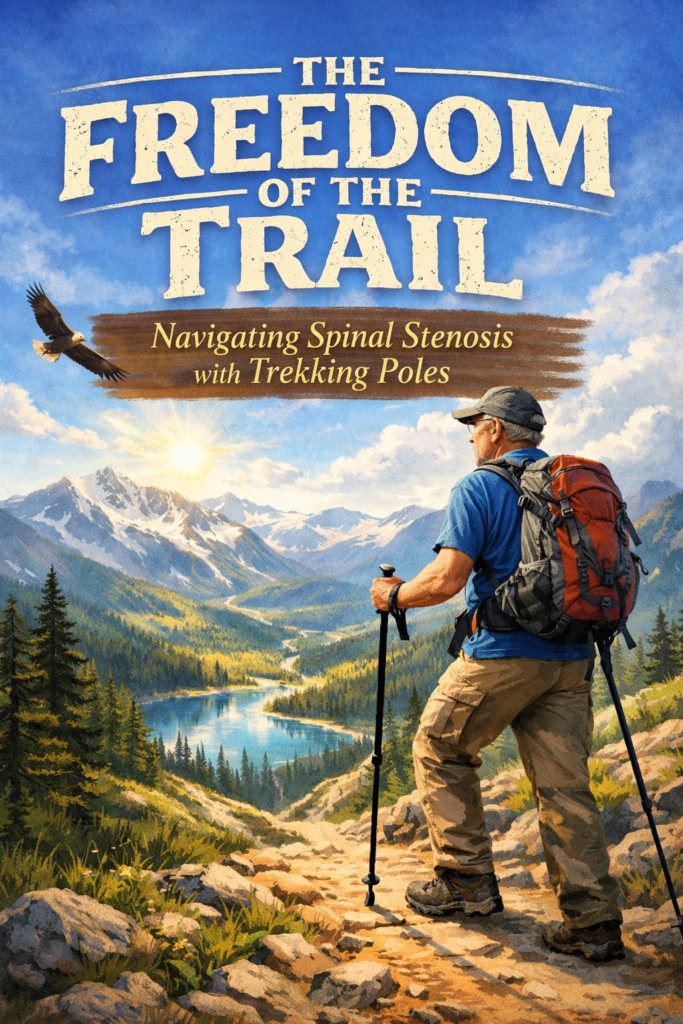
For many of us, the call of the wild isn’t just a cliché; it’s a necessity. The smell of damp pine needles, the crunch of gravel underfoot, and the reward of a vista that stretches for miles—these are the things that recharge our souls. But when you receive a diagnosis of lumbar spinal stenosis (LSS), that call can start to sound more like a warning.
If you’ve felt that telltale heaviness in your legs, the cramping that sets in after a mile, or the instinctive need to lean forward over a shopping cart just to catch your breath, you know the frustration. Spinal stenosis can make the world feel like it’s shrinking. But here’s the good news: your hiking days aren’t over. They just need a tactical upgrade.
While often seen as optional gear for “serious” peak-baggers, for a hiker with spinal stenosis, trekking poles are far more than accessories. They are orthopedic tools that redistribute weight, correct posture, and—most importantly—reopen the door to the Great Outdoors.
Understanding the "Why": The Anatomy of the Ache
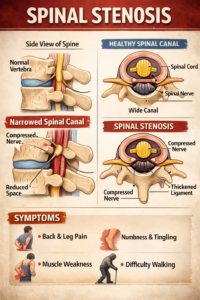
To understand why poles help, we first have to look at what’s happening in your back. Spinal stenosis is essentially a narrowing of the spaces within your spine, which puts pressure on the nerves that travel through the spinal cord.
- The Extension Problem: When we stand up straight or walk downhill, our spine naturally enters a state of extension (a slight backward arch). For someone with stenosis, this narrows the nerve canals even further, leading to “neurogenic claudication”—that painful cramping and weakness in the legs.
The Flexion Relief: You’ve probably noticed that leaning forward (flexion) feels great. It opens up those spinal passages and gives your nerves some breathing room.
This is where the magic of trekking poles happens. They allow you to maintain a slight, controlled forward lean and offload the compressive forces of gravity that usually punish your lower back.
1. The Power of "Four-Legged" Hiking
Humans were meant to be bipedal, but spinal stenosis makes a strong case for becoming a quadruped. By using two trekking poles, you are effectively turning yourself into a four-legged hiker.
Redistributing the Load Every step you take sends an impact up through your ankles, knees, and straight into your lumbar spine. Studies have shown that trekking poles can reduce the pressure on your lower extremities by up to 25%. When you’re hiking a five-mile loop, that adds up to tons of weight that your spine never has to process.
The “Push-Off” Factor Instead of your lower back and glutes doing 100% of the work to propel you forward, your shoulders, chest, and arms join the party. This upper-body engagement takes the “grind” out of the hike, allowing you to go further before the typical stenosis fatigue sets in.
2. Postural Correction: The "Shopping Cart" Effect
If you’ve ever found yourself leaning on a grocery cart because it makes your back feel better, you’ve already discovered the principle of trekking pole therapy.
When you hike without poles, fatigue often leads to poor form. You might over-arch your back or, conversely, slump in a way that creates uneven pressure. Trekking poles act as a constant postural cue.
Uphill: Poles allow you to lean into the mountain, keeping your spine in that “sweet spot” of slight flexion that keeps nerve channels open.
Downhill: This is usually the hardest part for stenosis sufferers because we tend to lean back to stay balanced. Poles allow you to plant them out in front, providing a “brake” system that lets you keep your torso slightly forward and stable, preventing the painful pinch of spinal extension.
3. Stability and Confidence (The Mental Game)
Stenosis doesn’t just cause pain; it can cause balance issues. Nerve compression can lead to “foot drop” or a general sense of instability. The fear of tripping on a root and not being able to catch yourself can be enough to keep a hiker at home.
Trekking poles provide points of contact. On uneven terrain—wet leaves, loose scree, or stream crossings—you have two extra anchors. This stability reduces the micro-adjustments your core muscles have to make every second. When your core doesn’t have to work overtime just to keep you upright, it can focus on supporting your spine.
Pro-Tips for the Stenosis Hiker
Adjust the Height Constantly: On the way up, shorten your poles so you can lean forward into the climb. On the way down, lengthen them so you can keep your chest up and slightly forward without arching your back.
The 90-Degree Rule: On flat ground, your elbows should be at a 90-degree angle. This keeps your shoulders relaxed and your spine neutral.
Use the Straps Correctly: Put your hand up through the loop and then grip. This allows you to put weight on the strap itself, relaxing your grip and preventing hand fatigue.
Take “Micro-Breaks”: Don’t wait for the pain to hit a 7 out of 10. Every 20 minutes, plant your poles, lean forward onto them, and let your spine decompress for 30 seconds.