
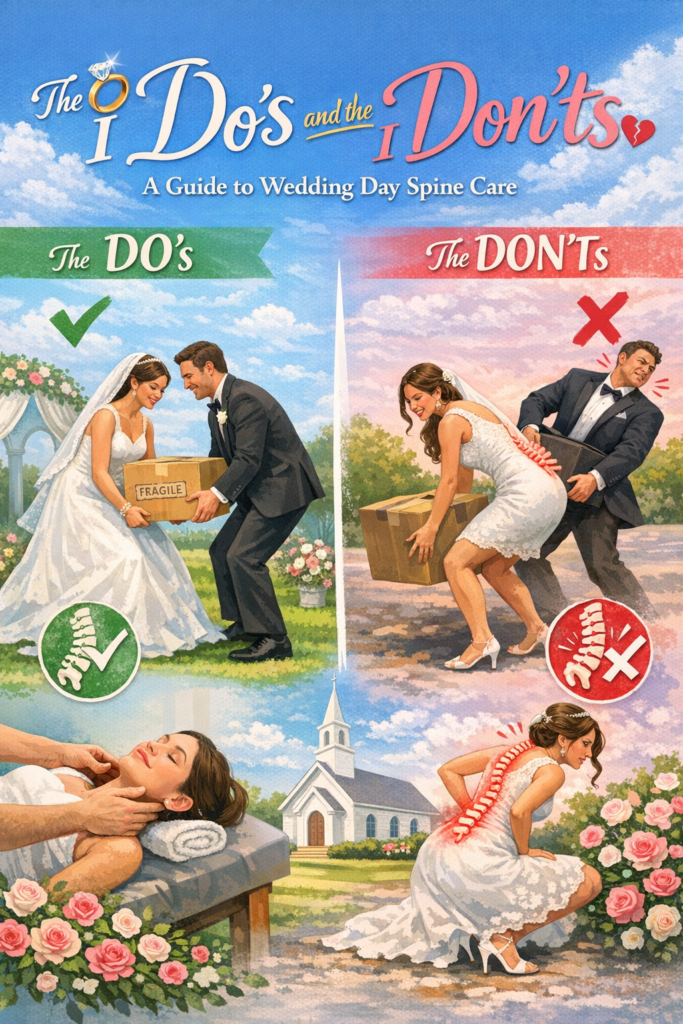
Your wedding day is often described as the happiest day of your life. It is also, physically speaking, a marathon. Between the pre-ceremony photos, the walk down the aisle, the receiving line, and a four-hour reception fueled by an open bar and a high-energy DJ, you are looking at roughly 8 to 12 hours of continuous physical demand.
When you add formal wear into the mix—heavy ballgowns, stiff tuxedos, and the architectural challenge of high heels—your spine becomes the unsung hero of the day. Without a plan, that “bridal glow” can quickly turn into a “lower back grimace” by the time the cake is cut.
Here is how to protect your back, maintain your posture, and survive your wedding day without ending it in a pile of heating pads.
1. The Foundation: Footwear is Not Negotiable
The Heel Height Rule: If you are wearing heels, aim for a “podiatrist-approved” height of 2 inches or less. If you must go higher for the ceremony, ensure the shoe has a platform to reduce the pitch of your foot.
The “Second Shoe” Strategy: Do not wait until your feet are bleeding to switch to flats. Have a pair of high-quality, supportive sneakers or wedges ready the moment the formal photos wrap up.
Insoles are Secret Weapons: Even formal dress shoes for men often lack arch support. Invest in high-quality gel or foam inserts. They absorb the impact of the “Electric Slide” so your vertebrae don’t have to.
2. Wardrobe Engineering
Formal wear is rarely designed with ergonomics in mind. However, a few tweaks can save your posture.
For the Gown-Wearers
Heavy dresses, especially those with long trains or significant beadwork, can weigh upwards of 15–25 pounds. This weight hangs primarily off your shoulders or hips.
- The Bustle is Critical: Ensure your tailor creates a secure bustle. Dragging a six-foot train behind you for hours creates an uneven “pull” on your core muscles, leading to acute lower back strain.
- Core Compression: A well-fitted corset or shapewear can actually act as a lumbar support belt, but only if it isn’t too tight. If you can’t take a deep diaphragmatic breath, your core muscles will shut down, leaving your spine to do all the work.
For the Suit-Wearers
- Watch the Wallet: Never keep a thick wallet in your back pocket. Sitting down with an uneven pelvis—even for a 20-minute dinner—can cause sacroiliac (SI) joint pain.
Jacket Weight: If your tuxedo jacket is heavy wool, take it off during the dinner service to give your traps and neck a break.
3. The Mechanics of Standing (Without the Slump)
Standing still is actually harder on your back than walking. When we stand for long periods, we tend to “lock” our knees and “dump” our weight into our lower back, creating an exaggerated curve called hyperlordosis.
Try the “Micro-Shift”:
Keep your knees “soft” (never fully locked).
Gently engage your lower abdominals—think about pulling your belly button 10% closer to your spine.
Shift your weight from heel to toe every few minutes to keep blood flowing.
4. The "Wedding Day" Stretch Routine
You don’t need a yoga mat to save your back. These three movements can be done discreetly in a bridal suite or bathroom stall:
The Shoulder Blade Squeeze: Take a deep breath and pull your shoulder blades down and back, as if trying to tuck them into your back pockets. This counters the “hunch” caused by holding a heavy bouquet or posing for photos.
The Pelvic Tilt: While standing, tuck your tailbone under you slightly and then release. This “wags the tail” and prevents the lower back from seizing up.
The Doorway Stretch: If you find a spare moment in a dressing room, place your forearms on a doorframe and lean forward. This opens the chest and prevents the forward-head posture that leads to tension headaches.
6. Hydration and Inflammation
It sounds like generic advice, but spinal discs are primarily composed of water. Dehydration causes these discs to lose some of their cushioning ability.
The 1:1 Ratio: For every glass of champagne, drink a full glass of water.
Anti-Inflammatory Prep: Consult with your doctor about taking a preventative dose of an anti-inflammatory (like ibuprofen) before the pain starts. It is much easier to prevent inflammation than it is to stop a full-blown back spasm mid-reception.