
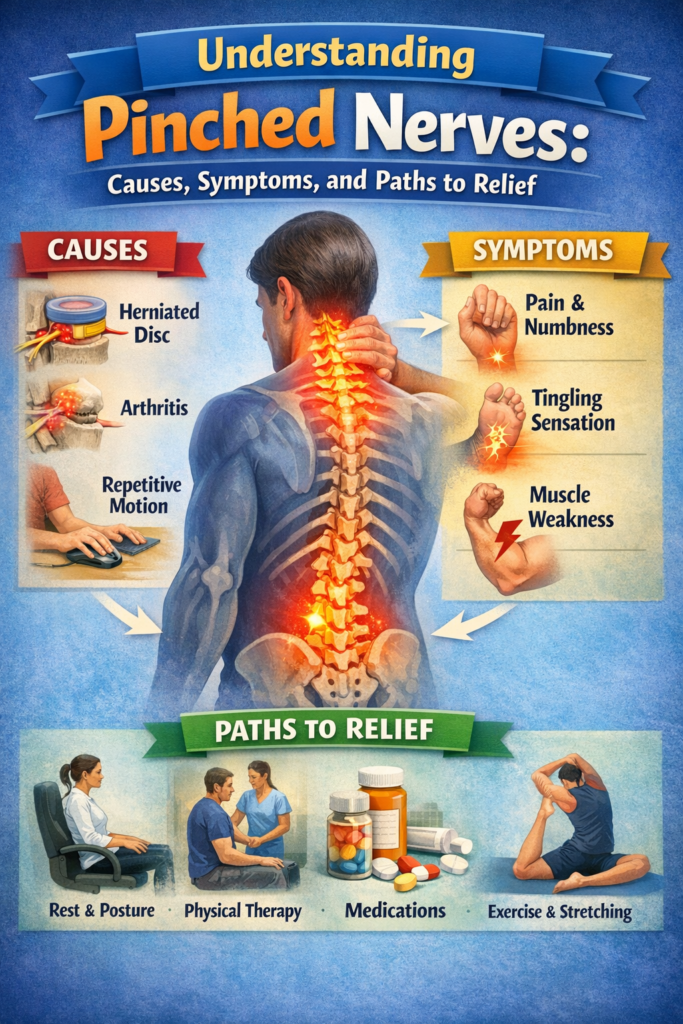
A pinched nerve can feel like a sudden, unwelcome intruder in your body. One moment you’re reaching for a coffee mug or turning your head to check traffic, and the next, a sharp bolt of lightning or a stubborn numbness takes over. While the sensation is often alarming, it is one of the most common reasons people seek neurological or orthopedic care.
In this comprehensive guide, we will explore what exactly is happening when a nerve gets “pinched,” how to identify the symptoms, and the most effective ways to find lasting relief.
What Exactly Is a Pinched Nerve?
A pinched nerve (clinically known as nerve compression) occurs when too much pressure is applied to a nerve by surrounding tissues. These “encroaching neighbors” can be bones, cartilage, muscles, or tendons.
Nerves are the body’s electrical wiring. When they are compressed, the flow of signals is disrupted. Think of it like a garden hose: if you step on the hose, the water flow thins to a trickle or stops entirely. In your body, this “interrupted flow” manifests as pain, tingling, or weakness.
Common Locations
While a pinched nerve can happen almost anywhere, they most frequently occur in:
The Neck (Cervical Spine): Often leading to pain radiating down the arms.
The Lower Back (Lumbar Spine): Often resulting in sciatica or leg pain.
The Wrist: Frequently associated with Carpal Tunnel Syndrome.
The Elbow: Often related to Cubital Tunnel Syndrome.
The Root of the Problem: Common Causes
Pinched nerves don’t usually happen without a reason. They are typically the result of structural changes or repetitive stress.
1. Herniated Discs
The spine is cushioned by soft, jelly-like discs. If a disc ruptures or bulges (herniates), the internal material can press directly against a spinal nerve root.
2. Osteoarthritis and Bone Spurs
As we age, wear and tear on the joints can cause the body to grow extra bone (bone spurs) to bolster the area. These spurs can narrow the space where nerves travel, leading to chronic compression.
3. Repetitive Motion and Overuse
Jobs or hobbies that require repetitive movements—like typing, assembly line work, or even certain sports—can cause tendons to swell, eventually squeezing the nerves that share the same narrow passageways.
4. Physical Trauma
Sudden injuries from car accidents, falls, or heavy lifting can shift structures in the body, causing immediate nerve impingement.
5. Pregnancy and Weight Gain
Increased weight and water retention can put extra pressure on nerve pathways. For example, many pregnant women experience carpal tunnel symptoms due to increased fluid volume.
Recognizing the Symptoms
A pinched nerve doesn’t always feel like “pain.” It often presents as a collection of sensory disturbances known as paresthesia.
| Symptom | Description |
| Sharp/Burning Pain | A “shooting” sensation that travels outward from the site of compression. |
| Numbness | A loss of sensation or a “dead” feeling in the affected area. |
| Paresthesia | The classic “pins and needles” sensation. |
| Muscle Weakness | Difficulty gripping objects or a feeling that a limb “gives out.” |
| The “Asleep” Feeling | That sensation of a foot or hand being asleep that won’t go away. |
Diagnosis: How Doctors Find the Pinch
If symptoms persist for more than a few days, it’s vital to seek professional advice. Doctors generally use a three-tiered approach to diagnosis:
Physical Exam: Checking reflexes, muscle strength, and sensory responses.
Imaging (MRI or CT): These allow doctors to see if a disc or bone spur is physically touching a nerve.
Electromyography (EMG): This test measures the electrical impulses in your muscles to see if the nerve is communicating correctly.
Paths to Relief and Recovery
The good news is that most pinched nerves (roughly 80-90%) improve with conservative, non-surgical treatment.
Immediate Self-Care
Rest: This is the most critical first step. Stop the activity that caused the pain and allow the inflammation to subside.
Ergonomic Adjustments: If work caused the issue, adjust your chair height, use a wrist rest, or switch to a standing desk.
Ice and Heat: Use ice for the first 48 hours to reduce swelling, then switch to heat to relax the surrounding muscles.
Professional Treatments
Physical Therapy: A therapist can teach you specific stretches to “floss” the nerve and strengthen the muscles that support your spine.
Medications: NSAIDs (like ibuprofen) help with inflammation. In more severe cases, doctors may prescribe corticosteroids or nerve-pain-specific medications.
Splinting: For carpal tunnel, wearing a splint at night keeps the joint in a neutral position, preventing further compression.