
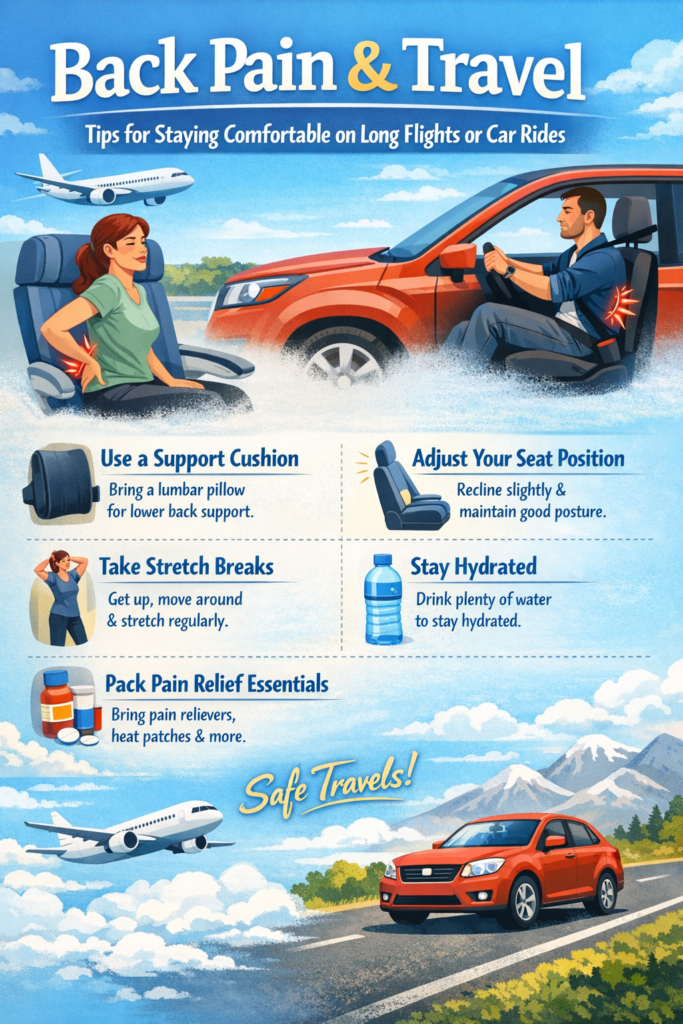
Traveling the world—whether for a high-stakes business meeting or a well-deserved coastal retreat—is one of life’s great rewards. However, for those who struggle with back pain, the prospect of a 12-hour flight or a cross-country drive can feel less like an adventure and more like a physical gauntlet.
The human spine was designed for movement, not for being wedged into a pressurized cabin seat or a bucket car seat for hours on end. Static loading, vibration, and poor ergonomics can turn a minor ache into a debilitating flare-up before you even reach your destination.
This guide provides a comprehensive blueprint for managing back pain during transit, ensuring you arrive at your destination ready to explore rather than retreating to a hotel bed.
1. The Pre-Trip Preparation: Setting the Foundation
Success begins before you leave the driveway. If you manage your pain proactively, you reduce the “cumulative load” on your spine.
Strategic Packing
The heaviest burden on your back isn’t the flight; it’s the luggage.
The Four-Wheel Rule: Always use “spinner” suitcases with four 360-degree wheels. Pushing a bag next to you puts significantly less strain on your rotator cuff and lower back than pulling a two-wheel bag behind you.
The Weight Limit: Even if the airline allows 23kg, your spine might not. Pack lighter, or split one heavy suitcase into two smaller, manageable ones.
The “Reach” Test: When lifting bags into an overhead bin or a car trunk, never twist. Pivot your entire body with your feet.
Consultation and Medication
If you have a history of chronic pain, schedule a quick check-in with your physiotherapist or GP. Ensure your “rescue” medications (anti-inflammatories or muscle relaxants) are in your carry-on, not your checked luggage.
2. Air Travel: Conquering the Cabin
Airplane seats are notoriously unfriendly to the lumbar curve. Most economy seats “bucket” the hips, forcing the lower back into a rounded, C-shaped curve that puts immense pressure on the intervertebral discs.
The Seat Selection Strategy
The Aisle is King: For back pain sufferers, the aisle seat is non-negotiable. It allows you to stand up and stretch without bothering neighbors, which is essential for decompression.
Bulkhead vs. Standard: Bulkhead seats offer more legroom, allowing you to extend your knees (which relieves hamstring tension that pulls on the lower back). However, they lack under-seat storage, meaning you can’t use a bag as a footrest—a key ergonomic hack.
Creating "External" Lumbar Support
Most plane seats have a hollow space right where your lower back should be supported.
The Travel Pillow Hack: Don’t put the U-shaped pillow around your neck. Instead, deflate it slightly and place it behind your lower back.
The Rolled Blanket: If you don’t have a pillow, roll up a thin airline blanket or a light jacket and wedge it into the small of your back to maintain the natural inward curve (lordosis) of your spine.
Movement Micro-Habits
Every 45 to 60 minutes, you must move. Even “fidgeting” in your seat helps.
Ankle Pumps: Flex your feet up and down to keep blood flowing and prevent stiffness.
Seated Pelvic Tilts: Gently arch and round your lower back while sitting to keep the joints lubricated.
The Galley Stretch: When the “fasten seatbelt” sign is off, head to the back of the plane. Stand with your hands on your hips and perform gentle back extensions (leaning backward slightly) to counteract the hours of forward slouching.
3. Road Trips: Managing the Driver’s Seat
Car travel introduces a different challenge: vibration. Constant micro-vibrations from the road can fatigue the spinal muscles faster than a stationary seat.
Ergonomic Positioning
-
The 100-Degree Rule: Your seatback should not be vertical, nor should it be a recliner. Aim for a 100 to 110-degree angle. This reduces intradiscal pressure compared to sitting perfectly upright.
-
Empty Your Pockets: Never sit with a wallet or phone in your back pocket. This tilts the pelvis and creates a functional scoliosis, putting uneven pressure on the sciatic nerve.
-
Steering Wheel Reach: Ensure your elbows have a slight bend. Reaching too far forward rounds the upper back and strains the neck (cervical spine).
The Power of the Cruise Control
On long highway stretches, use cruise control. This allows you to rest both feet flat on the floor for short periods, evening out the weight distribution across your sit-bones and hips.
Scheduled Pit Stops
Follow the “2-Hour Rule.” Even if you feel fine, stop every two hours. Get out, walk for five minutes, and perform a few standing lunges. This releases the hip flexors, which often tighten during driving and pull on the lumbar spine.
4. The Science of Temperature: Heat vs. Ice
One of the most effective ways to manage pain in transit is through temperature therapy.
Heat for Stiffness: Use wearable, adhesive heat wraps. They provide 8–12 hours of low-level heat, which increases blood flow and relaxes “guarded” muscles. These are perfect for long-haul flights where the cabin air is cold.
Ice for Acute Inflammation: If you tweaked your back while lifting luggage, ice is your best friend. Most flight attendants will happily fill a Ziploc bag with ice for you. Apply it for 15 minutes to numb the area and reduce swelling.
5. Hydration and Inflammation
It sounds simple, but dehydration is a major contributor to muscle cramping and disc sensitivity.
Disc Hydration: Your spinal discs are largely composed of water. In the low-humidity environment of a plane, they can lose volume, making them less effective as shock absorbers. Drink significantly more water than you think you need.
Avoid the “Inflammatory Duo”: Excess caffeine and alcohol can dehydrate you and increase systemic inflammation. Save the celebratory drink for when you’ve reached your hotel and can lie down.
6. Post-Arrival Recovery
The first 30 minutes after you arrive at your hotel or destination are critical. Do not immediately sit down at a restaurant or collapse into a soft sofa.
The Floor Decompression: Lie flat on your back on a firm floor with your knees bent (the “Hook Lying” position). This allows the spine to neutralize after hours of compression.
Gentle Walking: A 15-minute brisk walk helps “reset” the neural pathways and flushes out the lactic acid built up during the sedentary journey.
Check the Bed: Hotel pillows are often too soft or too thick. If the bed feels like a marshmallow, consider placing a spare duvet on the floor for a firmer sleeping surface if your back is in crisis.