
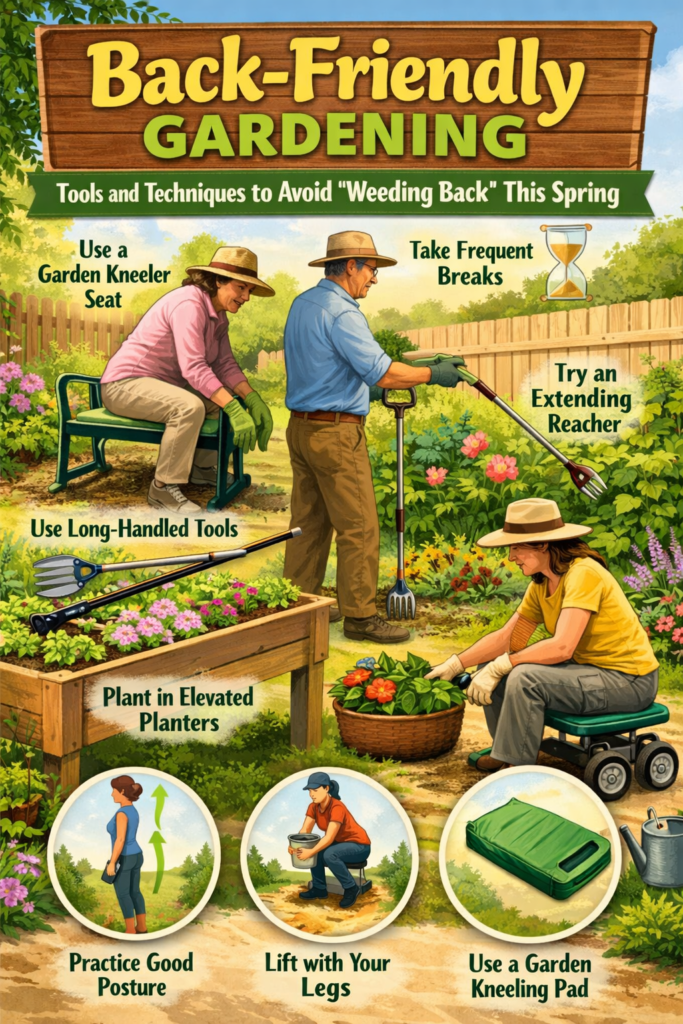
Gardening is one of the most rewarding ways to spend a spring morning, but for many, the joy of planting is often followed by the “price” of a stiff, aching lower back. Whether you call it “weeder’s back” or simply seasonal strain, the repetitive bending, lifting, and reaching involved in yard work can take a significant toll on the spine.
As the ground thaws and the planting season begins, protecting your physical health is just as important as nourishing your soil. By integrating ergonomic tools and smarter movement patterns, you can cultivate a beautiful garden without sacrificing your mobility.
Understanding the "Weeding Back"
The spine is a marvel of engineering, but it is not designed for prolonged periods of static loading in a flexed (bent forward) position. When you hunch over a flower bed to pull stubborn dandelions, several things happen:
Ligament Strain: The ligaments supporting the spine are stretched, leading to “creep,” where they temporarily lose their ability to stabilize the joints.
Disc Compression: Bending forward increases the pressure on the intervertebral discs, pushing the soft inner core toward the nerves.
Muscle Fatigue: The small stabilizing muscles of the lower back tire quickly, forcing larger muscle groups to overcompensate, leading to spasms.
To avoid these issues, we must shift the focus from “labor-intensive” gardening to “ergonomic” gardening.
1. Ergonomic Tools: Let the Equipment Do the Work
The right tools act as force multipliers, reducing the amount of physical effort required for every task.
Long-Handled Stand-Up Weeders
The single best investment for back health is a stand-up weeder. These tools typically feature a claw mechanism at the base and a foot pedal. You simply center the tool over the weed, step down to engage the claws, and lean the handle to pop the weed out—all while standing perfectly upright.
Telescopic Cultivators and Hoes
Standard trowels require you to be on your hands and knees. Telescopic tools allow you to cultivate soil and remove surface weeds from a standing position. Look for handles with “D-grips” or ergonomic curves that keep your wrist in a neutral position, reducing the risk of carpal tunnel strain alongside back pain.
Rolling Work Seats and Kneelers
If you prefer being close to the plants, avoid squatting or sitting directly on the ground. A rolling garden cart with a tractor-style seat allows you to move along a row while seated. Alternatively, a high-quality foam kneeler with sturdy side handles can help you transition from kneeling to standing without putting excessive pressure on your lumbar spine.
2. Smart Techniques for Spring Planting
How you move is just as vital as what you use. Implementing a few “pro-athlete” movement patterns in the garden can prevent 90% of common injuries.
The "Golfer’s Lift"
For light tasks, like picking up a dropped seed packet or a small hand tool, use the golfer’s lift. Keep one foot on the ground and allow the other leg to swing out behind you as you hinge at the hip. This counterbalances your weight and keeps your spine straight.
The Hip Hinge
When you must lean forward, never “round” your back. Instead, hinge at the hips. Imagine there is a rod running from your head to your tailbone; keep that line straight and push your glutes back as you lean. This engages the powerful muscles of your legs rather than the fragile muscles of your back.
The "Nose-to-Toes" Rule
One of the most common causes of a “tweaked” back is twisting while carrying weight. Always keep your nose pointed in the same direction as your toes. If you need to move a bag of mulch from the wheelbarrow to the garden bed, pivot your entire body with small steps rather than twisting at the waist.
3. Garden Design for Long-Term Health
If you find that traditional gardening is becoming too strenuous, consider modifying the landscape itself to be more “back-friendly.”
Raised Beds and Vertical Gardens
Lifting the garden to your level is the ultimate ergonomic solution. Raised beds that are at least 18 to 24 inches high allow you to sit on the edge while you work. For those with severe mobility issues, “waist-high” planter boxes eliminate the need to bend entirely. Vertical gardening—using trellises for peas, beans, and even small squash—keeps the harvest at eye level.
Strategic Mulching
The best way to avoid “weeding back” is to not have weeds in the first place. Applying a thick layer of organic mulch (3–4 inches) in early spring suppresses weed growth and keeps the soil moist, meaning you spend less time bending over to pull invaders and less time lugging heavy hoses around for watering.
4. The "Gardener’s Warm-Up"
Treat gardening like a workout. Before you grab the shovel, spend five minutes preparing your body:
Pelvic Tilts: While standing, gently tuck your tailbone under and then arch back slightly to wake up the lower back.
Shoulder Rolls: Relieve tension in the neck and upper back.
Hamstring Stretches: Tight hamstrings pull on the pelvis, which in turn pulls on the lower back. A gentle stretch makes hinging much easier.
5. Listen to the "Timer"
The “flow state” of gardening often makes us lose track of time. We stay in one position for an hour, only to realize we can’t stand up straight when we’re finished.
Set a timer on your phone for 20 minutes. Every time it goes off, stand up, take a short walk, drink some water, and do a gentle back extension (placing your hands on your hips and leaning back slightly). Micro-breaks prevent the cumulative strain that leads to injury.