
We’ve all been there. You lift a heavy box, twist the wrong way during a workout, or simply wake up with a back that feels like it’s been fused together. Your first instinct? Dive under the covers and don’t move until the calendar flips.
For decades, “stay in bed” was the standard medical advice for back pain. But modern science has a new message, and it’s a bit of a plot twist: Too much rest can actually make your recovery slower and more painful.
Here is why light movement is the secret sauce to healing your back, and why “taking it easy” shouldn’t mean staying stationary.
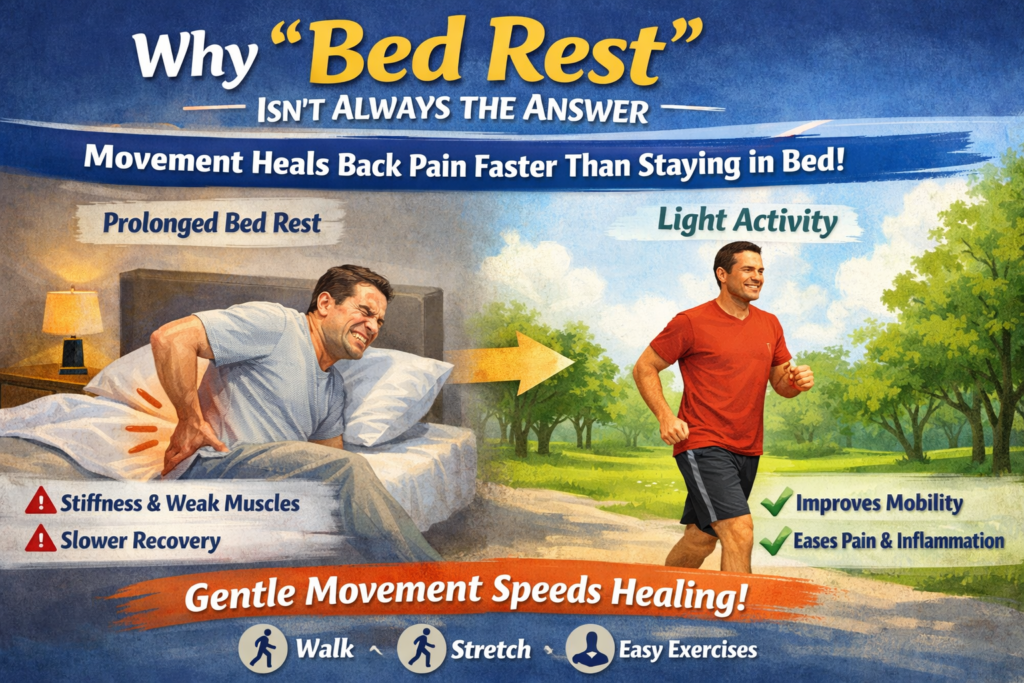
1. Your Spine Needs "Oil" (and Movement is the Pump)
Unlike your muscles, the discs in your spine don’t have a direct blood supply. They rely on a process called imbibition—a fancy word for absorbing nutrients through movement.
When you move, you create a pump-like action that circulates fluid, bringing in oxygen and nutrients while flushing out inflammatory waste. When you stay in bed:
Circulation slows down.
Inflammation stagnates around the nerves.
The “healing materials” your body needs can’t reach the target.
2. The "Rust" Factor: Stiffness and Weakness
Your body is incredibly efficient—if you don’t use it, you lose it. Within just 24 to 48 hours of complete bed rest, your core and back muscles begin to atrophy (weaken).
Weak muscles provide less support for your spine, which puts more pressure on your joints and discs when you finally do try to stand up. This creates a vicious cycle where you feel even more fragile, leading to more rest and more weakness.
3. The Psychology of Pain
Pain isn’t just physical; it’s neurological. When you lie in a dark room focusing entirely on your back, your brain turns up the volume on those pain signals.
Gentle movement acts as a “distraction” for your nervous system. Safe, controlled motion sends “happy” signals to the brain that compete with the pain signals, effectively lowering the overall intensity of what you’re feeling.
How to Move Without Making It Worse
“Don’t stay in bed” isn’t a license to go run a marathon. It’s about Relative Rest. Think of it as staying active within a “pain-free” or “low-pain” zone.
| The Goal | What to Do | What to Avoid |
| Blood Flow | Short, frequent walks (even just 5 mins). | Sitting on a soft couch for hours. |
| Mobility | Gentle pelvic tilts or “cat-cow” stretches. | Heavy lifting or high-impact jumping. |
| Nervous System | Deep diaphragmatic breathing. | Staying in one position for >30 mins. |
The "Yellow Light" Rule
When moving with back pain, follow the traffic light system:
Green Light: Movement feels good or causes a mild “stretch” ache. Keep going.
Yellow Light: Movement is uncomfortable but doesn’t get worse as you go. Proceed with caution.
Red Light: Movement causes sharp, radiating, or increasing pain. Stop and find a different position.
The Bottom Line
While it’s okay to take it easy for the first few hours after an injury, your bed should be for sleeping, not for “healing” a back strain. Motion is lotion. By choosing a short walk over a long nap, you’re giving your spine the circulation and support it needs to bounce back faster.
Note: If your back pain is accompanied by numbness, weakness in your legs, or loss of bladder/bowel control, skip the walk and head straight to a doctor. These are “Red Flags” that require professional intervention.