
The Dynamic Duo: Why Vitamin D and Calcium Are Inseparable Partners for Lifelong Health
When it comes to bone health, most people instantly think of calcium. We grew up hearing that a glass of milk builds strong bones and teeth, and that calcium is the ultimate mineral shield against skeletal decline. However, calcium cannot do the job alone. In fact, without its vital partner—Vitamin D—consuming high amounts of calcium is akin to buying a high-end security system without the keys to turn it on.
The relationship between Vitamin D and calcium is one of the most remarkable examples of physiological synergy in the human body. They are metabolic partners, relying on each other to maintain bone density, support muscle function, regulate immune health, and protect cardiovascular pathways. Understanding how this dynamic duo works together can transform how you approach nutrition, supplementation, and daily wellness.
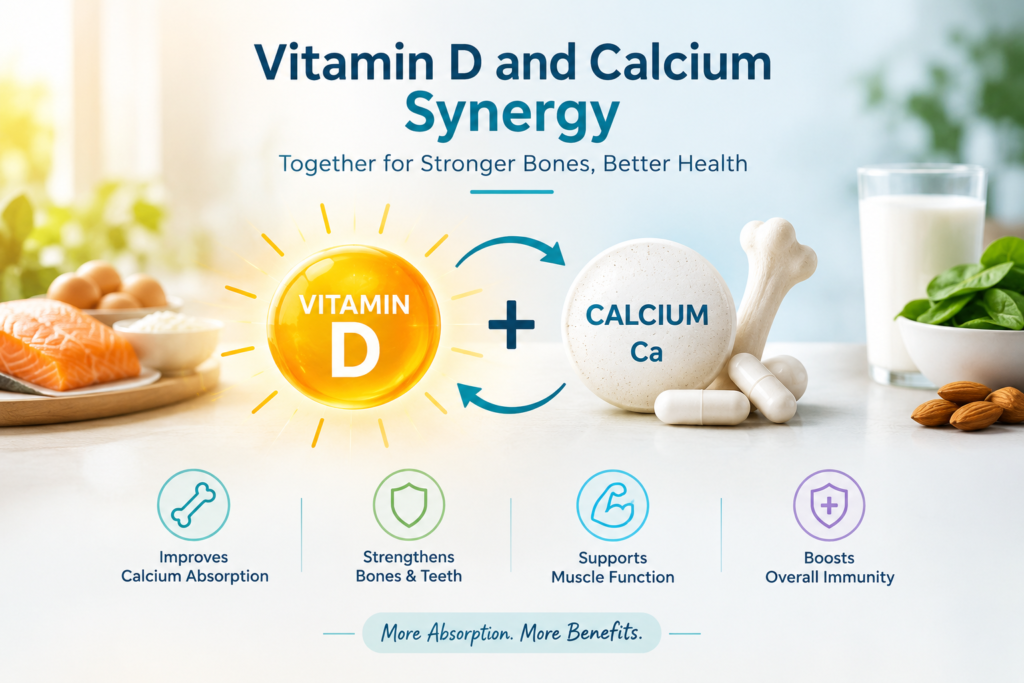
The Biological Dance: How Vitamin D and Calcium Work Together
To truly appreciate their synergy, we need to look at how calcium enters and moves through the body.
The Absorption Barrier: Dietary calcium is consumed through foods like dairy, leafy greens, and fortified grains. However, the human gut is naturally reluctant to absorb it. Without assistance, the body only absorbs roughly 10% to 15% of the calcium you consume.
The Keymaker (Vitamin D): This is where Vitamin D steps in. When activated in the body (becoming calcitriol), Vitamin D acts as a biochemical director. It stimulates the production of transport proteins in the intestinal lining that actively pull calcium out of your digestive tract and usher it into your bloodstream. Without adequate Vitamin D, calcium absorption plummets to as low as 10%, regardless of how much calcium you ingest.
The Deployment (Bone Remodeling): Once calcium is safely in the bloodstream, the body must route it to where it is needed most—your bones and teeth. Vitamin D, along with other micronutrients like Vitamin K2, signals bone-building cells (osteoblasts) to deposit calcium into the skeletal matrix, hardening and strengthening your bone structure.
Why Calcium Alone Falls Short
A common pitfall in modern nutrition is the isolated focus on high-dose calcium supplements. Many individuals load up on calcium to prevent osteoporosis, overlooking their Vitamin D status. This approach is not only inefficient; it can also be counterproductive.
When calcium enters the bloodstream due to high intake, but there is insufficient Vitamin D to direct it properly into the bones, that excess calcium has nowhere to go. Instead of strengthening your skeletal system, unmanaged calcium can accumulate in soft tissues, contributing to arterial calcification, stiffness, and an increased risk of kidney stones.
True bone health is not about consuming the highest amount of calcium possible; it is about achieving optimal bioavailability and correct targeting. Vitamin D ensures that the calcium you consume actually serves its intended purpose.
Beyond the Bones: Systemic Benefits of the Synergy
While bone density is the most famous outcome of this partnership, the synergy between Vitamin D and calcium extends far beyond the skeleton:
1. Muscle Function and Athletic Performance
Calcium ions are responsible for muscle contraction, allowing your muscle fibers to slide past one another when you move. Meanwhile, Vitamin D receptors in muscle tissue support muscle strength, coordination, and recovery. A deficiency in either can lead to muscle weakness, cramping, and an increased risk of falls, particularly in older adults.
2. Immune System Regulation
Vitamin D is a powerful immunomodulator, helping the body mount a defense against pathogens while keeping inflammation in check. Calcium acts as a secondary messenger within immune cells, helping trigger appropriate cellular responses when an infection is detected.
3. Cardiovascular and Metabolic Support
Emerging research highlights the role of calcium and Vitamin D in maintaining healthy blood pressure and vascular tone. Adequate Vitamin D helps prevent the rogue deposition of calcium in blood vessels, supporting endothelial health and overall cardiovascular longevity.
Spotting Deficiency: The Hidden Risk
Despite living in a sun-rich world, Vitamin D deficiency remains a global health epidemic. Because Vitamin D is synthesized primarily through skin exposure to ultraviolet B (UVB) rays, modern indoor lifestyles, office jobs, extensive sunscreen use, and geographic latitudes drastically limit natural production.
When Vitamin D levels drop, the body panics. To maintain vital blood calcium levels for heart and brain function, the parathyroid glands release parathyroid hormone (PTH). This hormone leaches calcium out of your bones to keep blood levels stable. Over time, this silent process depletes bone mineral density, leading to conditions like osteopenia and osteoporosis.
Common signs of combined insufficiency include:
Persistent fatigue and low energy
Generalized muscle weakness
Frequent illness or slow immune recovery
How to Optimize Your Intake Naturally
Achieving the right balance of Vitamin D and calcium does not require a complicated regimen. It comes down to mindful nutrition, safe sun habits, and intelligent supplementation when necessary.
1. Prioritize Whole-Food Sources of Calcium
Dairy Products: Milk, yogurt, and cheese are rich, highly bioavailable sources.
Plant-Based Alternatives: Fortified plant milks (almond, soy, oat), tofu prepared with calcium sulfate, and dark leafy greens like kale and bok choy.
Fish with Edible Bones: Canned sardines and salmon.
2. Secure Your Vitamin D Sources
Safe Sun Exposure: Spending 10 to 20 minutes outdoors in midday sun (depending on skin tone and geographic location) allows your skin to naturally synthesize Vitamin D.
Dietary Sources: Fatty fish (mackerel, salmon, sardines), egg yolks, and fortified foods.
3. Consider Synergy-Focused Supplementation
If your blood work reveals a deficiency, a combined approach is often recommended by healthcare professionals. Look for supplements that pair Vitamin D3 (cholecalciferol) with calcium, and consider whether Vitamin K2 is included to further ensure calcium is directed away from arteries and straight into the bones. Always consult a physician before starting high-dose regimens to ensure safe blood levels.
Summary: Building a Strong Foundation for Life
Vitamin D and calcium are the ultimate biological team. One cannot thrive without the other, and focusing on just one leaves your health incomplete. By understanding how this dynamic duo collaborates to protect your bones, muscles, and metabolic systems, you can take proactive control of your long-term vitality. Nourish your body with nutrient-dense foods, embrace safe natural sunlight, and give your skeletal system the cooperative support it needs to keep you strong at every stage of life.
What specific aspect of bone health or nutrition would you like to explore next?