
If you’ve ever dealt with the nagging pull of lower back pain or the sharp zing of sciatica, you’ve likely looked at an inversion table and wondered: Is hanging like a bat actually the secret to a pain-free life?
Inversion therapy—the practice of suspending yourself upside down to stretch the spine—has been around since Hippocrates. But before you strap your ankles in, let’s peel back the marketing and look at the actual benefits and the non-negotiable precautions.
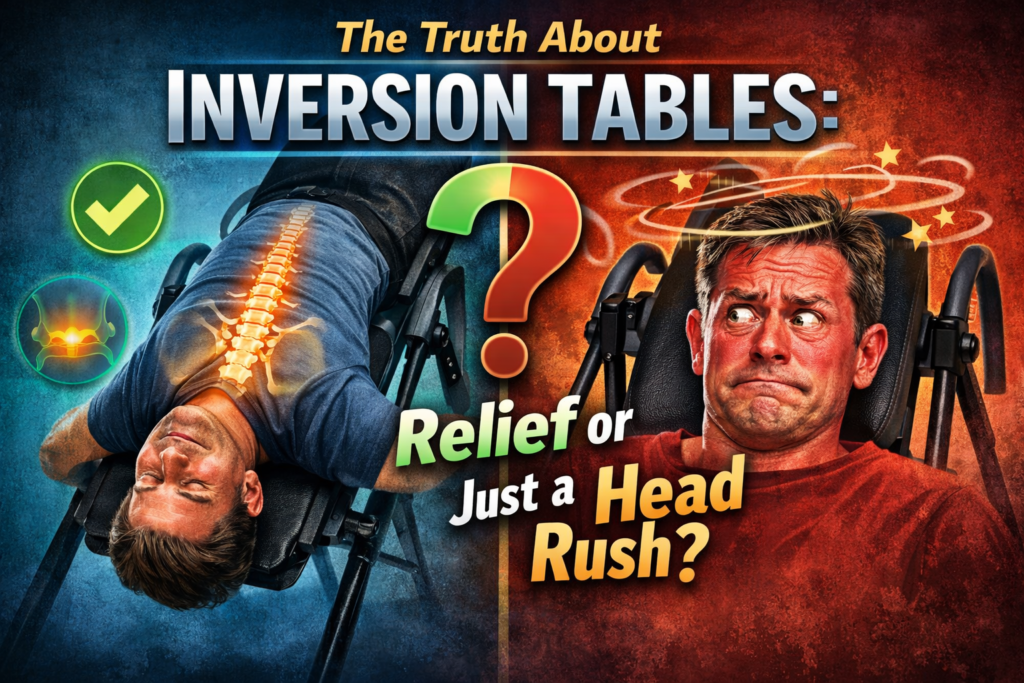
How Spinal Decompression Works
At its core, inversion therapy is about fighting gravity. Throughout the day, gravity compresses your spine, squeezing the fluid out of your spinal discs and bringing vertebrae closer together.
When you invert, you create traction. This process:
-
Increases Intervertebral Space: By pulling the vertebrae apart slightly, you reduce pressure on compressed nerves.
Rehydrates Discs: The “negative pressure” allows nutrients and fluids to seep back into the spinal discs.
-
Relaxes Paraspinal Muscles: It forces the large muscles in your back to let go of the tension they hold to keep you upright.
The Real Benefits
While an inversion table won’t “cure” a structural deformity, it can be a powerhouse for symptom management.
| Benefit | What it actually does |
| Sciatica Relief | Reduces the pinch on the sciatic nerve by opening up the lower lumbar gaps. |
| Stress Reduction | Gentle inversion triggers the parasympathetic nervous system, helping you relax. |
| Improved Flexibility | Regular use can help maintain a more youthful range of motion in the spine. |
| Post-Workout Recovery | Athletes use it to “reset” the spine after heavy lifting or high-impact running. |
The "Catch": Who Should Stay Upright?
Inversion therapy isn’t for everyone. Because hanging upside down increases blood pressure in the head and puts stress on certain joints, you should avoid inversion if you have:
Glaucoma or Pink Eye: The increased ocular pressure can cause permanent damage.
High Blood Pressure or Heart Disease: Inversion significantly spikes your heart rate and BP.
Hernias: The internal pressure can exacerbate hiatal or inguinal hernias.
Inner Ear Issues: This can lead to severe bouts of vertigo.
Pregnancy: It is generally advised to stay on level ground during this time.
Pro-Tips for a Safe First "Hang"
If you’ve cleared it with your doctor and are ready to flip, follow these three golden rules:
Start Shallow: You don’t need to go a full 90 degrees. Start at a 15° to 30° angle. You can get significant decompression without being totally vertical.
Short Bursts: Limit your sessions to 1–2 minutes at first. Your body needs time to adjust to the fluid shift.
The “Slow Return”: Never snap back to an upright position. Come up in stages to prevent dizziness or “orthostatic hypotension.”
The Bottom Line: An inversion table is a fantastic tool for temporary relief and long-term maintenance, but it’s a supplement to—not a replacement for—core strengthening and professional physical therapy.