
Decoding Targeted Ozone Therapy: Mechanisms, Applications, and Modern Perspectives
In the ever-evolving landscape of integrative and alternative medicine, few modalities spark as much debate, curiosity, and clinical exploration as ozone therapy. While general ozone treatments have been utilized for over a century—ranging from water purification to early battlefield disinfection—modern integrative medicine has shifted toward a more precise approach: Targeted Ozone Therapy.
By moving away from generalized or blanket applications, targeted ozone therapy seeks to concentrate the biochemical benefits of medical-grade ozone directly to specific tissues, joints, or pathological sites. This comprehensive guide explores what targeted ozone therapy is, how it functions at a cellular level, its proposed applications, safety considerations, and what the future holds for this controversial practice.
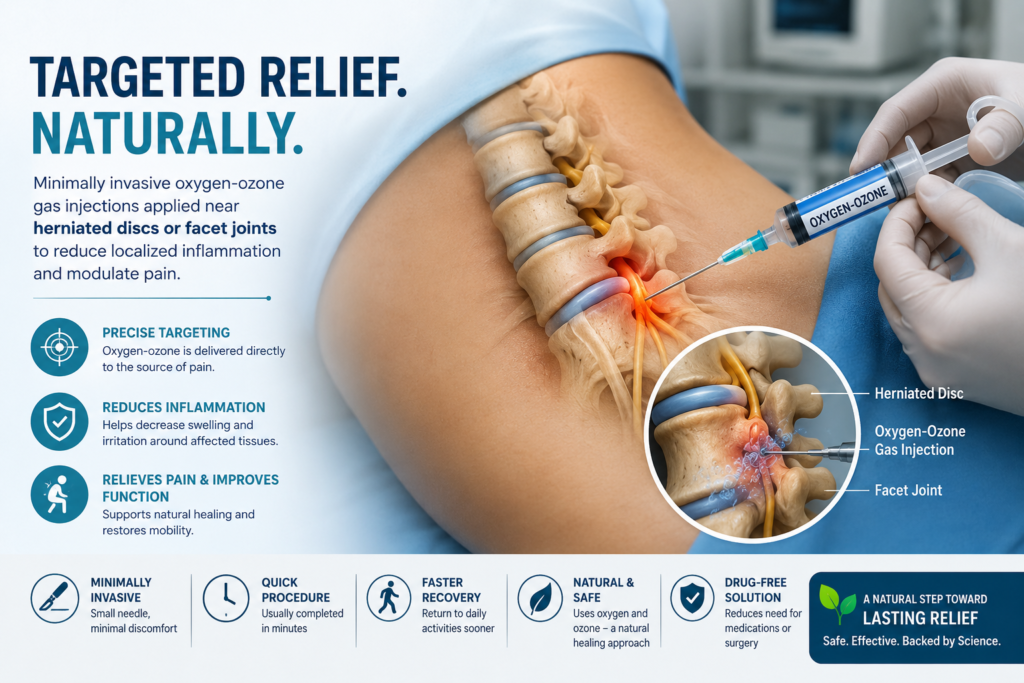
1. Understanding Ozone and the Concept of "Targeting"
Ozone ($O_3$) is an unstable, highly reactive molecule composed of three oxygen atoms. Unlike standard atmospheric oxygen ($O_2$), which is diatomic and stable, ozone possesses an extra oxygen atom that readily detaches to react with surrounding biological molecules.
In broad medical contexts, ozone has traditionally been administered systemically via methods like Major Autohemotherapy (MAH)—where a patient’s blood is drawn, exposed to an ozone-oxygen mixture, and re-infused—or through rectal insufflation.
Targeted ozone therapy, however, refers to localized delivery methods designed to maximize therapeutic concentrations at a precise anatomical site while minimizing systemic exposure or side effects. These specialized techniques include:
Intra-articular injections: Delivering ozone directly into joint spaces (such as the knee or shoulder) for localized arthritis or sports injuries.
Perilesional or subcutaneous infiltration: Injecting gas mixtures around chronic wounds, scars, or painful trigger points.
Discreet localized insufflation: Applying ozone gas specifically to the ears, bladder, or sinuses to target localized microbial loads or inflammation.
2. The Science and Mechanism of Action
To understand why practitioners utilize targeted ozone, one must examine how ozone interacts with human biology. When medical-grade ozone ($O_2/O_3$ gas mixtures generated from pure oxygen) encounters bodily fluids like blood, interstitial fluid, or synovial fluid, it does not act merely as a brute-force bleach or disinfectant. Instead, it triggers a controlled, hormetic oxidative stress response.
The Hormetic Effect
Hormesis is a biological phenomenon where a mild, transient stressor stimulates the body’s endogenous defense mechanisms. When localized ozone dissolves into tissue fluids, it instantly reacts with polyunsaturated fatty acids and water to create short-lived signaling molecules called reactive oxygen species (ROS) and lipid peroxidation products (LOPs).
These secondary messengers initiate a cascade of beneficial cellular pathways:
Nrf2 Pathway Activation: Targeted ozone upregulates the Nrf2 transcription pathway, which is master-regulator for cellular antioxidant defense. This induces the production of protective enzymes like glutathione peroxidase, superoxide dismutase, and catalase.
Modulation of Inflammation: By suppressing pro-inflammatory cytokines and encouraging anti-inflammatory mediators, targeted ozone helps reset chronic, dysfunctional inflammatory loops in damaged tissues.
Enhanced Local Oxygenation: Localized delivery stimulates the release of 2,3-diphosphoglycerate (2,3-DPG) in red blood cells, which improves the local unloading of oxygen to starved or ischemic tissues, boosting local cellular metabolism and ATP production.
3. Primary Clinical Areas of Targeted Application
Proponents and specialized integrative clinics utilize targeted ozone across several key areas of medicine, emphasizing precision and site-specific recovery.
A. Musculoskeletal and Joint Disorders
One of the most common applications of targeted ozone is in orthopedics and pain management. Intra-articular ozone injections are frequently explored for:
-
Osteoarthritis: Particularly knee osteoarthritis, where localized gas injections are believed to reduce cartilage-degrading enzymes, stimulate chondrocyte metabolism, and alleviate chronic pain.
-
Tendinopathies and Ligament Laxity: Targeted micro-injections around damaged tendons (similar to prolotherapy techniques) aim to provoke a localized healing cascade, encouraging collagen deposition and tissue repair.
-
Herniated Discs: In some international specialized centers, targeted oxygen-ozone injections into lumbar disc herniations are used to shrink the herniated material mechanically and chemically, reducing nerve root compression.
B. Chronic Wound Management and Dermatology
For stubborn, non-healing wounds—such as diabetic foot ulcers, pressure sores, or ischemic ulcers—targeted application plays a vital role:
Microbial Disruption: Ozone possesses broad-spectrum antimicrobial properties, capable of neutralizing bacteria, fungi, and viruses on contact without promoting the antibiotic resistance associated with pharmaceutical drugs.
Angiogenesis: Localized treatment stimulates growth factors (like VEGF) that encourage the formation of new blood vessels, accelerating closure in chronic wounds that lack proper circulation.
4. Safety, Controversies, and Regulatory Perspectives
Despite its growing popularity in alternative medicine circles, ozone therapy remains a subject of intense medical debate and regulatory scrutiny.
The Toxicity of Inhalation
The human respiratory system is uniquely intolerant to ozone. Inhaling ozone gas—even at low concentrations—triggers severe chemical irritation, pulmonary edema, coughing, and permanent lung tissue damage. Regulatory bodies emphasize that ozone should never be inhaled under any circumstances. This forms the basis of strict warnings from agencies like the U.S. Food and Drug Administration (FDA) and the Environmental Protection Agency (EPA), which maintain that ozone is a toxic gas with recognized air-pollutant properties.
Lack of Large-Scale Clinical Trials
Mainstream medical establishments often dismiss ozone therapy due to a relative scarcity of large-scale, double-blind, placebo-controlled human clinical trials. Critics argue that standardized dosing protocols, long-term safety data, and universally accepted treatment guidelines are lacking. Furthermore, improper administration—such as direct intravenous gas injection executed poorly—carries severe risks of gas embolism or allergic shock.
Practitioner Qualifications
Because targeted ozone therapy often operates outside conventional medical school curricula, the quality of care depends heavily on the practitioner. Safe execution requires certified training, medical-grade generators that precisely control ozone-to-oxygen ratios, and strict adherence to anatomical sterility and delivery constraints.
5. Preparing for a Consultation: What to Expect
If you and a qualified integrative physician are exploring targeted ozone therapy as part of an adjuvant care plan, transparency and preparation are essential.
Comprehensive Medical Review: Ensure your provider reviews your full medical history, ruling out contraindications such as glucose-6-phosphate dehydrogenase (G6PD) deficiency, severe anemia, or active hyperthyroidism.
Understanding Adjunctive Status: Recognize that targeted ozone is typically employed as a complementary or adjunctive therapy—meant to support physical therapy, conventional wound care, or orthopedic management—rather than a standalone cure-all.
Informed Consent: Discuss the empirical nature of the treatment, potential mild side effects (such as temporary soreness at injection sites or a brief Herxheimer-like reaction), and realistic expectations for recovery.
Summary Table: Targeted Ozone Therapy at a Glance
| Feature | Description |
| Core Definition | Precise application of medical-grade $O_2/O_3$ gas or fluids to specific tissues or joints. |
| Primary Mechanism | Hormetic stress response, Nrf2 pathway activation, antioxidant induction, and enhanced local oxygen delivery. |
| Common Target Sites | Arthritic joints, chronic wounds/ulcers, dental cavities, and localized pain points. |
| Major Safety Rule | Never inhale ozone gas. Lungs are highly sensitive; improper inhalation causes acute injury. |
| Regulatory Status | Viewed cautiously or unapproved by major agencies (like the FDA) due to a need for broader clinical trial data. |
Conclusion
Targeted ozone therapy represents a fascinating bridge between oxidative biochemistry and localized regenerative medicine. By focusing ozone delivery strictly onto problem areas—ranging from degenerative joints to non-healing wounds—practitioners aim to harness the hormetic, healing properties of oxygen while bypassing the risks of generalized exposure. However, because of safety warnings, regulatory caution, and the absolute necessity of precision equipment, patients must approach this therapy with careful research and under the direct supervision of a licensed, highly trained medical professional.