
Beyond Passive Metal: How Smart Implants with Integrated Sensors are Revolutionizing Medicine
For decades, medical implants—such as orthopedic joint replacements, dental screws, and cardiac pacemakers—have acted as passive helpers. They provide structural support, replace damaged tissue, or regulate rhythms, but once they are placed inside the body, they remain entirely silent about how well they are healing or performing.
That paradigm is rapidly changing. Enter smart implants with integrated sensors: a convergence of advanced materials science, miniaturized microelectronics, and wireless communication. These next-generation medical devices do not just sit inside the body; they actively monitor, analyze, and report back on biological health.
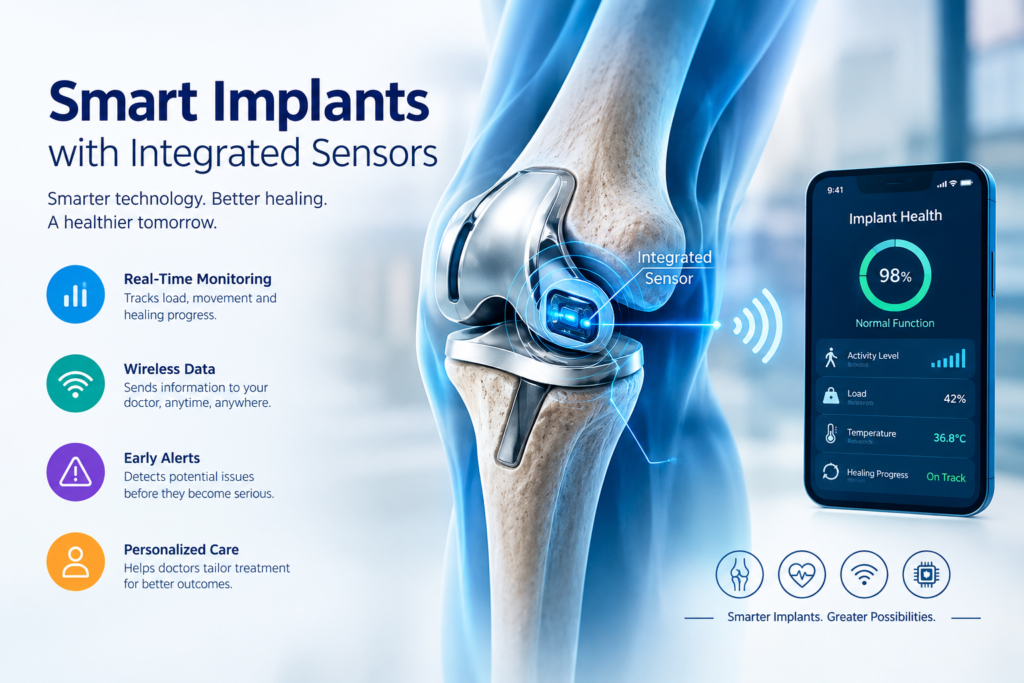
What Makes an Implant "Smart"?
Traditional implants rely on biocompatible materials like titanium to physically restore function. Smart implants take this a step further by embedding microscopic sensors, ultra-low-power microcontrollers, and wireless transmitters directly into the device framework.
These integrated components can track a wide range of physiological metrics in real-time, including:
Mechanical Stress and Strain: Measuring load distribution and weight-bearing progress on joint replacements.
Biochemical Markers: Detecting early indicators of inflammation, infection, or changes in tissue pH.
Temperature Variations: Identifying abnormal localized heat shifts that often signal the onset of post-surgical complications.
Key Applications Across Medical Fields
The integration of sensors is transforming multiple branches of medicine:
Orthopedics: Smart knee and hip replacements can track metrics like step count, range of motion, and gait symmetry. Surgeons no longer have to rely solely on subjective patient feedback during follow-ups; instead, they have objective, continuous data showing how well the bone is fusing to the implant (osseointegration).
Cardiology: Modern cardiac devices are evolving beyond simple pacing. They now feature advanced diagnostic sensors that monitor heart tissue changes and hemodynamics, predicting heart failure events long before symptoms physically manifest.
Dentistry: Smart dental implants can track localized gum health, monitor bite force patterns, and flag micro-motions that could lead to implant loosening, allowing for preventative adjustments.
The Transformative Benefits
Early Detection of Complications: By continuously keeping tabs on the micro-environment of the surgical site, smart implants can flag subtle changes—like an emerging infection—weeks before a patient would feel symptoms, enabling proactive intervention.
Data-Driven, Personalized Recovery: Clinicians can tailor rehabilitation programs based on precise data streamed directly from the implant rather than generalized recovery timelines.
Fewer Invasive Check-Ups: Continuous remote monitoring means patients—especially those with mobility limitations or those living in remote areas—can have their recovery tracked seamlessly without frequent trips to the clinic
Hurdles on the Road to Mainstream Adoption
While the potential is monumental, bringing smart implants into widespread clinical practice comes with distinct challenges:
Power Management: Because replacing a battery requires invasive surgery, components must run on extremely low power, utilizing energy-harvesting technologies or ultra-efficient system-on-chip (SoC) architectures.
Data Security and Privacy: Implants that transmit biological data wirelessly introduce cybersecurity vulnerabilities. Ensuring robust end-to-end encryption is vital to protect sensitive patient records.
Biocompatibility and Durability: The hardware must withstand the harsh, corrosive biological environment of the human body for decades without degrading or triggering adverse immune reactions.
The Future: Predictive and Proactive Healthcare
As researchers pair smart implant data with Artificial Intelligence (AI) and machine learning, these devices will do more than just transmit data—they will predict outcomes. Future iterations may even feature targeted drug-delivery systems that release localized anti-inflammatory medications the moment a problem is detected.
Smart implants represent a profound shift from reactive medicine to proactive, continuous care. By bridging the gap between biology and digital intelligence, they are turning our internal hardware into active partners in lifelong wellness.
What are your thoughts on integrating smart technology directly into the human body? Could this be the ultimate frontier of personalized medicine? Let’s discuss in the comments below!