
Straighten Up, Log In: How Tele-Rehabilitation and Digital Posture Tracking Are Transforming Spinal Health
In an era where a vast majority of the workforce spends over eight hours a day hunched over laptops, smartphones, and tablets, “tech neck” and chronic back pain have quietly morphed into a modern epidemic. Coupled with the logistical challenges of traveling to a physical clinic for ongoing physiotherapy, keeping up with spinal health can feel like an uphill battle.
Enter the powerful combination of tele-rehabilitation and digital posture tracking—a technological shift bringing expert physical therapy and real-time posture correction straight into our living rooms and home offices.
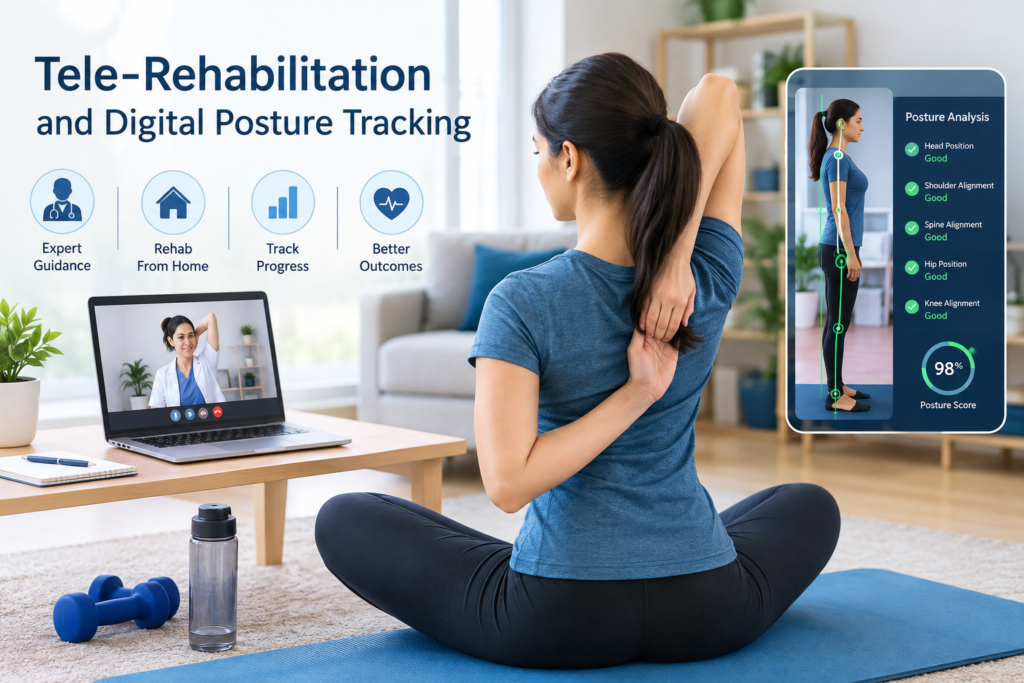
What is Tele-Rehabilitation?
Tele-rehabilitation is the delivery of rehabilitative and physiotherapy services remotely using digital communication tools. Rather than requiring a weekly physical commute to a clinic, patients utilize video conferencing apps, dedicated web portals, and connected wearables to interact with licensed physical therapists.
From post-surgical recovery and chronic pain management to corrective spinal exercises, tele-rehabilitation ensures continuity of care without geographical boundaries.
The Role of Digital Posture Tracking
While video calls bridge the distance between patient and therapist, digital posture tracking solves the problem of accuracy when the therapist isn’t in the room.
Using AI-driven computer vision, mobile device cameras, or wearable IoT sensors, digital posture tracking systems can:
Analyze Spinal Alignment: Instantly detect misalignments such as forward head posture, rounded shoulders, and pelvic tilt.
Provide Real-Time Feedback: Give users audio or visual cues when they slouch during work or perform a rehabilitation exercise incorrectly.
Quantify Progress: Measure improvements in range of motion and spinal angles objectively over weeks, replacing guesswork with hard data.
Why This Dynamic Duo is Gaining Traction
1. Superior Treatment Adherence
Traditional home-exercise programs often suffer from poor compliance because patients forget routines or lose motivation. Tele-rehabilitation platforms keep patients accountable through scheduled virtual check-ins, gamified apps, and guided video modules.
2. Ergonomics Meets Everyday Life
Posture tracking isn’t just for exercise time—it monitors everyday habits. Office workers can receive immediate ergonomic alerts when their slouching crosses a threshold, preventing chronic strain before it turns into severe pain.
3. Accessibility and Cost-Effectiveness
For individuals living in rural areas, those with limited mobility, or busy urban professionals, cutting out travel time makes high-end physical therapy far more accessible and sustainable.
The Road Ahead
As artificial intelligence and wearable tech continue to mature, the gap between in-clinic care and virtual care is narrowing rapidly. Clinical studies consistently show that web-based exercise and tele-rehabilitation interventions yield impressive results in correcting spinal deformities and building trunk endurance.
By merging professional medical guidance with smart tracking technology, we are moving from a reactive healthcare model to a proactive, prevention-first digital lifestyle.
Image Request Details
Image Name:
tele-rehabilitation-posture-tracking-hero.jpgAlt Text: A person working at a desk while a laptop and wearable sensor track their spinal posture and connect via tele-rehabilitation to a virtual physical therapist.
Meta Description: Discover how tele-rehabilitation and digital posture tracking are revolutionizing physiotherapy, improving tech neck, and making spinal health accessible from home.
Description: A clean, modern lifestyle image depicting a remote professional sitting at an ergonomic desk setup, with subtle digital graphic overlays highlighting proper spine alignment and a tablet displaying a live video consultation with a physiotherapist.
What area of your daily routine do you think would benefit most from digital posture tracking—your work hours or your home exercise habits?