
Living with nerve pain (neuropathy) often feels like living with a faulty alarm system. Whether it’s a constant burn, a sharp electric shock, or a persistent tingle, nerve pain isn’t just physical—it’s exhausting.
While medication and physical therapy are standard tools in the kit, many are turning to the ancient practices of mindfulness and meditation to dial down the volume on their symptoms. But how does sitting still help when your body feels like it’s under fire?
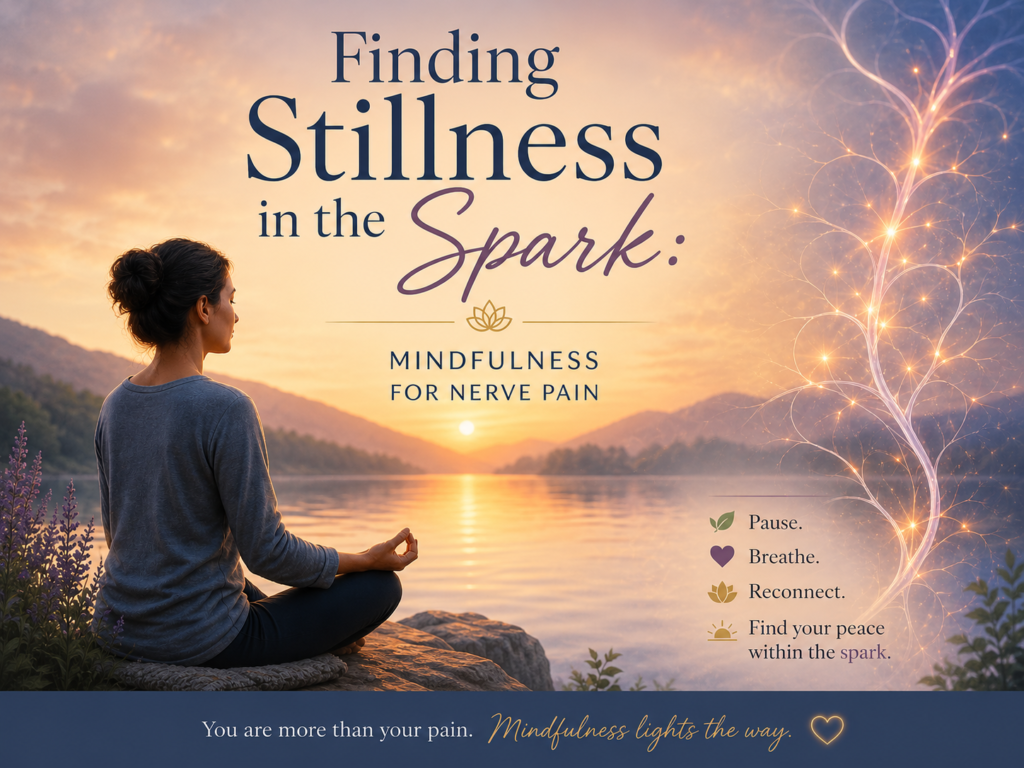
The Science: Rewiring the Pain Response
Nerve pain is unique because it often involves maladaptive neuroplasticity. Essentially, your nervous system becomes over-sensitized, staying in a state of “high alert” even when there is no immediate injury.
Meditation works by tapping into the brain’s ability to reorganize itself. Research suggests that consistent mindfulness can:
Shrink the Emotional Impact: It detaches the physical sensation from the emotional distress (the “Why is this happening to me?” cycle).
Lower Cortisol: Reducing stress hormones prevents the systemic inflammation that often flares up nerve sensitivity.
Thicken the Gray Matter: Studies have shown that long-term meditators have more gray matter in brain regions associated with pain regulation.
3 Practical Techniques for Nerve Pain
You don’t need to sit cross-legged on a mountain for hours. Here are three ways to start managing flares today:
1. The Body Scan
Instead of running away from the pain, the body scan involves mentally “visiting” each part of your body.
Why it works: It teaches you to observe the pain as a sensation (like “heat” or “pressure”) rather than a threat. This creates a psychological “buffer” between you and the discomfort.
2. Diaphragmatic Breathing (Belly Breathing)
Nerve pain often triggers the “fight or flight” response, which tightens muscles and worsens the pain.
The Method: Inhale deeply through your nose for 4 seconds, distending your stomach. Hold for 2, and exhale slowly for 6.
The Result: This stimulates the vagus nerve, signaling your nervous system to switch from “alert” to “rest and digest.”
3. "Softening" Into the Pain
When we feel a sharp nerve pang, our instinct is to tense up. Mindfulness teaches the opposite: Softening.
Acknowledge the sensation, name it (“there is a tingling”), and consciously relax the muscles around the site of the pain.
What Mindfulness Is (and Isn't)
It is important to set realistic expectations. Mindfulness isn’t a “cure” in the sense that it makes the damaged nerve vanish, but it changes your relationship with the pain.
| Mindfulness Is… | Mindfulness Is Not… |
| A tool to reduce the intensity of pain. | A replacement for medical treatment. |
| A way to manage the anxiety of “flares.” | An overnight fix or a “magic wand.” |
| A practice of staying in the present. | Ignoring or “pushing through” the pain. |