
A Comprehensive Guide to Maintaining Mobility, Managing Pain, and Preserving Independence
As we journey through life, our bodies undergo a myriad of natural changes. Among the most vital yet vulnerable systems affected by time is the spinal column. The spine is the structural core of the body, housing the delicate spinal cord and providing the support necessary to stand tall, twist, bend, and move through the world.
In older adults, spine health becomes a cornerstone of overall vitality and longevity. Geriatric spine care—a specialized medical and therapeutic approach dedicated to diagnosing, managing, and treating spinal conditions in older adults—plays a transformative role in preserving functional independence and quality of life.
Whether you are an older adult looking to maintain your active lifestyle, a caregiver supporting a loved one, or simply someone planning for healthy aging, understanding geriatric spine care is essential. This comprehensive guide explores the unique challenges of the aging spine, common conditions, advanced treatment options, and actionable daily strategies to keep your back strong and healthy.
1. Anatomy of the Aging Spine: What Changes Over Time?
To understand geriatric spine care, we must first look at how the spine evolves as we age. The human spine is a masterpiece of engineering, consisting of 33 vertebrae separated by shock-absorbing intervertebral discs, stabilized by ligaments, and powered by a complex network of muscles.
Over the decades, several physiological changes occur:
Disc Degeneration: The intervertebral discs act as cushions between our vertebrae. Composed largely of water and a gel-like center, these discs naturally dry out and lose their elasticity with age. This flattening reduces the space between vertebrae and diminishes the spine’s shock-absorbing capacity.
Facet Joint Arthritis: The facet joints connect the vertebrae and allow for smooth twisting and bending movements. Like knees and hips, these joints are prone to osteoarthritis as the protective cartilage wears down over time.
Ligament Thickening: The ligaments supporting the spine can become stiff and thicken with age, which can inadvertently narrow the spinal canal.
Bone Density Loss (Osteoporosis): Bones constantly remodel themselves, but after mid-life, bone resorption often outpaces bone formation. This leads to porous, fragile bones that are vulnerable to micro-fractures or major compression fractures.
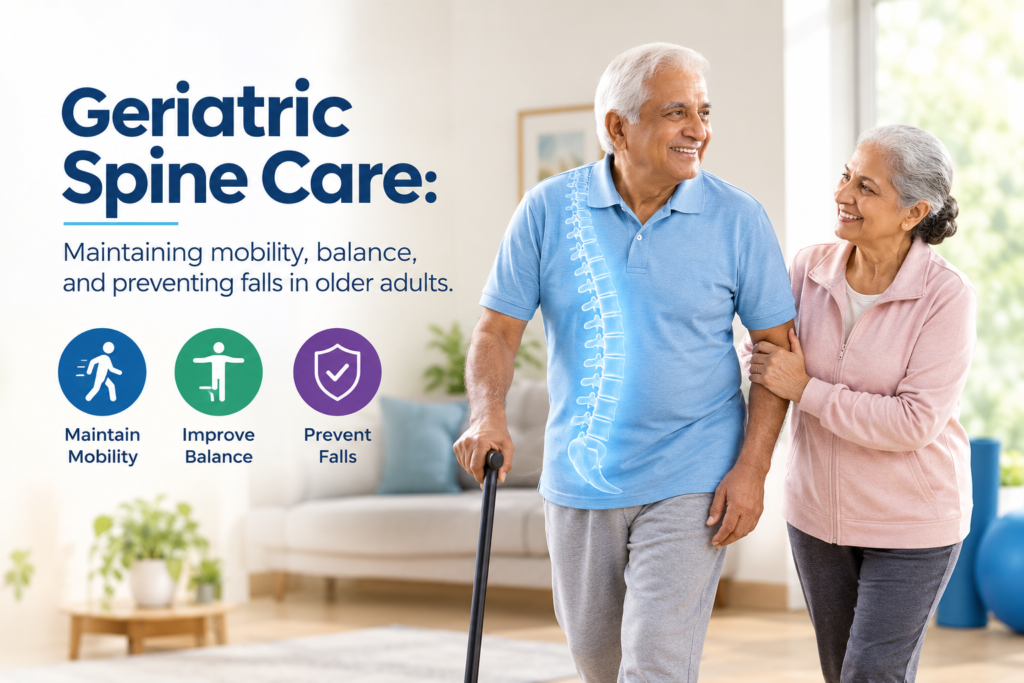
2. Common Spinal Conditions in Older Adults
Because of these cumulative structural changes, older adults are more susceptible to specific spinal pathologies. Recognizing the symptoms early can prevent minor discomfort from escalating into debilitating conditions.
Spinal Stenosis
Spinal stenosis occurs when the spinal canal narrows, putting pressure on the spinal cord and nerve roots. It most commonly affects the lumbar (lower) spine or cervical (neck) spine.
Symptoms: Numbness, tingling, or cramping in the legs, buttocks, or feet, which often worsens when walking or standing upright. A hallmark sign is feeling immediate relief when sitting down or leaning forward (such as pushing a grocery cart), which opens up the spinal canal.
Degenerative Disc Disease (DDD)
While “disease” sounds alarming, DDD is a natural part of aging rather than a progressive illness. It describes the breakdown of spinal discs.
Symptoms: Chronic, low-grade back or neck pain that may occasionally flare up into sharp, disabling pain. It often worsens with prolonged sitting, bending, lifting, or twisting.
Vertebral Compression Fractures (VCFs)
Weakened by osteoporosis, vertebrae can collapse under normal daily stress, such as stepping down hard, coughing, or lifting a light object.
Symptoms: Sudden, severe back pain that worsens when standing or walking and improves when lying down. Multiple compression fractures can lead to a noticeable loss of height and a forward-curving posture known as hyperkyphosis (often called a “dowager’s hump”).
Spondylolisthesis
This condition occurs when one vertebra slips forward over the adjacent vertebra, usually due to arthritis or degenerative changes, which can pinch nearby nerves.
Symptoms: Lower back pain, stiffness, and pain or numbness in the thighs and legs after walking short distances.
3. The Holistic Philosophy of Geriatric Spine Care
Geriatric spine care differs significantly from spine care for younger populations. Younger patients often present with acute injuries (like sports injuries or acute disc herniations) that require aggressive, localized interventions. In contrast, older adults frequently present with multi-factorial, chronic, and degenerative conditions intertwined with other systemic health concerns like cardiovascular disease, diabetes, or reduced kidney function.
Therefore, modern geriatric spine care relies on a multi-disciplinary, conservative-first philosophy. The primary goals are not necessarily a “cure” or achieving a Hollywood-perfect spine, but rather:
Pain Reduction: Minimizing discomfort to restore function.
Functional Preservation: Maintaining the ability to perform Activities of Daily Living (ADLs) independently.
Safety and Fall Prevention: Protecting fragile bones and nerves from traumatic injury.
Optimizing Quality of Life: Balancing pain relief with overall systemic health and vitality.
4. Conservative and Non-Surgical Treatments
The vast majority of older adults with spine issues can achieve significant relief through non-invasive or minimally invasive modalities. Surgery is almost always viewed as a last resort when conservative measures fail or when progressive neurological deficits (such as sudden muscle weakness or loss of bowel/bladder control) occur.
Physical Therapy and Targeted Exercise
Physical therapy is the cornerstone of geriatric spine care. A specialized physical therapist can design a gentle, customized program focusing on:
Core Stabilization: Strengthening the abdominal and back muscles to create a natural “corset” that supports the spine.
Flexibility and Stretching: Relieving tight muscles around the hips and lower back that pull the spine out of alignment.
Posture Education: Teaching safe body mechanics for sitting, standing, bending, and lifting.
Medical Pain Management
Managing pain safely in older adults requires extreme caution due to age-related changes in drug metabolism and the risk of polypharmacy (taking multiple medications).
Non-Opioid Medications: Acetaminophen or topical NSAIDs (non-steroidal anti-inflammatory drugs) are often preferred over oral NSAIDs, which can carry risks of gastrointestinal bleeding and kidney strain in older populations.
Interventional Procedures: Epidural steroid injections, facet joint injections, or nerve blocks can provide targeted relief for acute inflammation, allowing patients to participate fully in physical therapy.
Nerve Ablation: Radiofrequency ablation (RFA) can temporarily “turn off” pain signals from arthritic facet joints.
Assistive Devices and Ergonomics
Small environmental adjustments can dramatically reduce spinal strain. Ergonomic chairs, supportive footwear, properly fitted lumbar rolls, and assistive walking devices (like walkers or canes) help distribute weight evenly and prevent dangerous falls.
5. When Is Surgery Necessary? And What Are the Options?
When conservative treatments fail to provide adequate relief, or when spinal instability threatens nerve function, surgical intervention becomes a viable and life-changing option. Thanks to incredible advancements in medical technology, spine surgery for older adults is safer and more precise than ever before.
Minimally Invasive Spine Surgery (MISS)
Traditional open spine surgery involves large incisions and significant muscle stripping, which can be difficult for older adults to recover from. Minimally invasive techniques use smaller incisions, specialized tubular retractors, and advanced imaging to reach the spine while sparing surrounding muscles. Benefits include:
Reduced blood loss
Shorter hospital stays
Lower risk of post-operative infection
Faster initial recovery times
Decompression Procedures (Laminectomy)
For spinal stenosis, a laminectomy involves removing a small portion of the bone (the lamina) or thickened ligaments to create more room for the spinal cord and nerves, relieving pressure and pain.
Spinal Fusion and Stabilization
If a patient has severe spinal instability, spondylolisthesis, or severe deformity, fusion surgery may be performed to permanently connect two or more vertebrae using bone grafts and metal hardware (rods and screws). Newer techniques, such as lateral or oblique approaches, allow surgeons to perform fusions with minimal disruption to back muscles.
Vertebroplasty and Kyphoplasty
For painful osteoporotic compression fractures, these quick outpatient procedures offer near-instant relief. A specialized medical-grade bone cement is injected directly into the fractured vertebra to stabilize the bone and prevent further collapse. In kyphoplasty, a tiny balloon is first inflated inside the vertebra to restore lost height before the cement is applied.
6. Lifestyle Habits for a Resilient Spine
Prevention and active self-care are powerful tools in geriatric spine care. Adopting healthy daily habits can dramatically slow spinal degeneration and protect bone density.
| Habit Category | Recommended Practice | Benefit |
| Nutrition | Adequate intake of Calcium and Vitamin D; lean proteins. | Supports bone density remodeling and muscle mass maintenance. |
| Movement | Low-impact exercises (walking, swimming, tai chi, yoga). | Improves spinal lubrication, core strength, and balance. |
| Hydration | Drinking plenty of water throughout the day. | Keeps intervertebral discs hydrated and resilient. |
| Environment | Removing loose rugs, improving lighting, installing grab bars. | Prevents traumatic falls and subsequent spinal fractures. |
| Tobacco Cessation | Eliminating smoking or nicotine use. | Improves blood flow to spinal discs and preserves bone health. |
7. The Role of Caregivers and Family Members
Caring for an older adult with chronic back pain or spinal issues requires empathy, patience, and vigilance. Family members and professional caregivers play a vital role in geriatric spine care by:
Monitoring Symptoms: Watching for subtle signs of worsening neurological issues, such as increased unsteadiness, frequent tripping, or new numbness in the limbs.
Medication Management: Ensuring that pain medications and bone-health supplements (like calcium and bisphosphonates) are taken correctly and on schedule.
Encouraging Safe Activity: Motivating loved ones to stay gently active rather than retreating to total bed rest, which can accelerate muscle wasting and bone loss.
Home Safety Audits: Collaborating with occupational therapists to make necessary home modifications, such as adding stairlifts, bathroom grab bars, and non-slip mats.
Looking Ahead: Embracing Active Aging
Age is just a number, and spinal degeneration is an expected part of the human journey—it does not have to mean a life defined by pain or immobility. With proactive wellness habits, cutting-edge medical advancements, and compassionate geriatric spine care, older adults can continue to lead vibrant, active, and independent lives.
By embracing a proactive approach—addressing minor aches early, strengthening core muscles, protecting bone health, and consulting specialized spine experts when necessary—you can ensure that your spine remains a strong and steady pillar for all the adventures yet to come.