
Prolotherapy is a regenerative injection therapy designed to treat chronic joint, tendon, and ligament pain by stimulating the body’s natural healing process. The procedure involves injecting a harmless, mild irritant solution—most commonly concentrated dextrose—directly into weakened or damaged connective tissues where they attach to bone. This controlled micro-injury triggers a localized inflammatory response, which signals the body to rush growth factors, fresh blood, and fibroblasts to the area to deposit new collagen. Over a series of treatments, this process strengthens and thickens stabilizing tissues, reduces joint laxity, and offers a non-surgical path toward long-term pain relief and structural stability.
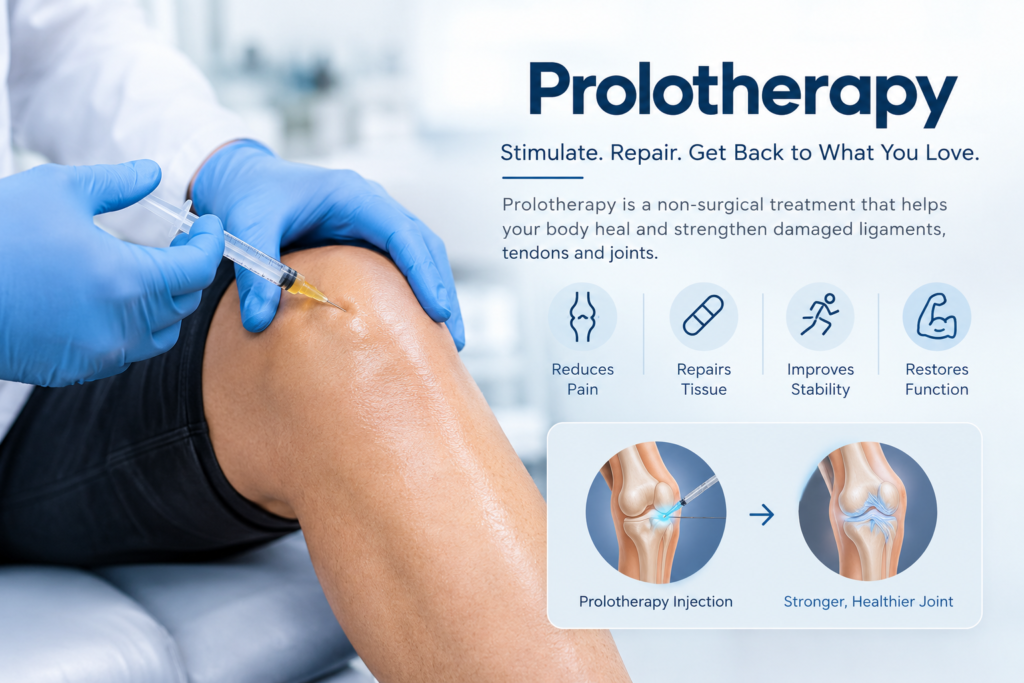
The step-by-step process harnesses your body’s acute inflammatory response to build long-term strength:
-
Targeted Injection: The practitioner carefully injects the proliferant solution into the precise sites where ligaments or tendons attach to the bone (entheses).
-
Controlled Inflammation: The solution causes a mild, localized inflammatory reaction.
-
Healing Cascade: Your body interprets this micro-injury as a signal to send healing cells, growth factors, and fresh blood to the area.
-
Tissue Reinforcement: Fibroblasts (cells that synthesize connective tissue) are stimulated to deposit new collagen, making the ligaments and tendons stronger, thicker, and more stable.
What to Expect During and After Treatment
The Procedure: A typical course involves a series of treatments—usually ranging from 3 to 6 sessions, spaced 2 to 4 weeks apart, depending on the severity of the injury and the patient’s healing response.
Post-Treatment Sensation: Because prolotherapy intentionally triggers an inflammatory response, it is normal to experience temporary increased pain, stiffness, or swelling at the injection site for a few days.
Pain Management: Doctors typically advise avoiding anti-inflammatory drugs (NSAIDs like ibuprofen) after the procedure, as you want the natural inflammatory healing cascade to occur; acetaminophen or natural methods are generally used for comfort.
Recovery: Mild activity can usually be resumed quickly, though high-impact exercise may need to be paused temporarily.
Is Prolotherapy Right For You?
While prolotherapy offers a promising, minimally invasive alternative to surgery for many, it is not a one-size-fits-all solution. Success depends heavily on an accurate diagnosis by a qualified physician specializing in regenerative medicine, as well as the patient’s overall health and ability to heal.
If you are tired of short-term fixes and want to explore a treatment focused on structural repair and long-term joint stability, schedule a consultation with a certified regenerative medicine specialist to discuss whether prolotherapy fits your health goals.
Note: Always consult with a qualified healthcare professional before beginning any new treatment for chronic pain.
What specific joint or area of your body are you hoping to find relief for with prolotherapy?
The Procedure: A typical course involves a series of treatments—usually ranging from 3 to 6 sessions, spaced 2 to 4 weeks apart, depending on the severity of the injury and the patient’s healing response.
Post-Treatment Sensation: Because prolotherapy intentionally triggers an inflammatory response, it is normal to experience temporary increased pain, stiffness, or swelling at the injection site for a few days.
Pain Management: Doctors typically advise avoiding anti-inflammatory drugs (NSAIDs like ibuprofen) after the procedure, as you want the natural inflammatory healing cascade to occur; acetaminophen or natural methods are generally used for comfort.
Recovery: Mild activity can usually be resumed quickly, though high-impact exercise may need to be paused temporarily.