
Sciatica refers to severe, radiating nerve pain that originates along the path of the sciatic nerve—the longest and thickest nerve in the human body. Running from the lower back through the hips, buttocks, and down each leg, the sciatic nerve typically causes symptoms on only one side of the body when compressed or inflamed. The condition is most commonly triggered by a herniated disc, a bone spur on the spine, or spinal stenosis pinching the nerve roots.
Symptoms range from a dull, persistent ache to a sharp, burning sensation or electric shock-like jolt shooting down the back of the thigh and calf. Affected individuals frequently experience numbness, tingling, or muscle weakness in the involved leg, making sitting or standing painful. Fortunately, most acute cases resolve within four to six weeks through conservative non-surgical management, including physical therapy, core-strengthening exercises, gentle stretching, anti-inflammatory medications, and temperature therapy. Immediate medical intervention is advised if symptoms involve progressive motor weakness or bowel and bladder dysfunction.
Causes of Sciatica
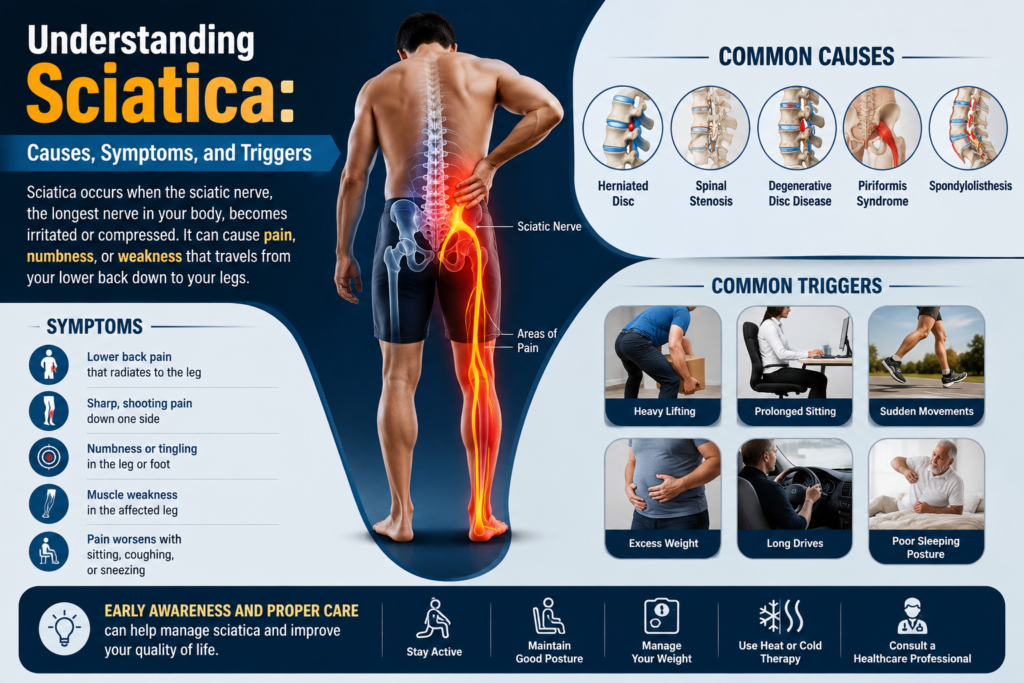
Herniated Discs: The gel-like center of a spinal disc leaks out and compresses the nearby nerve root.
Degenerative Disc Disease: Age-related wear down of spinal discs reduces cushioning, causing nerve impingement.
Lumbar Spinal Stenosis: Narrowing of the spinal canal in the lower back puts direct pressure on the nerve roots.
Spondylolisthesis: A vertebra slips forward over the one below it, pinching the sciatic nerve exit path.
Piriformis Syndrome: Spasms or tightness in the piriformis muscle compress the sciatic nerve running beneath or through it.
Spinal Bone Spurs: Overgrowth of bone (osteophytes) on the spinal vertebrae pinches surrounding nerve branches.
Sacroiliac (SI) Joint Dysfunction: Inflammation or abnormal movement in the SI joint irritates the adjacent sciatic nerve roots.
Spinal Tumors or Masses: Non-cancerous or malignant growths in the spine press against the sciatic nerve.
Trauma or Injury: Direct impact from car accidents, falls, or sports injuries creates acute lumbar inflammation.
Pregnancy: Hormonal loosening of ligaments and shift in center of gravity strain the lower spine and pinch nerve roots.
Primary & Secondary Symptoms
Sharp Shooting Pain: Electric shock-like or burning pain radiating from the lower back down one leg.
Unilateral Location: Symptoms typically affect only one side of the lower body at a time.
Numbness & Tinging: A “pins and needles” sensation (paresthesia) in the buttock, thigh, calf, or foot.
Muscle Weakness: Difficulty moving the leg or flexing the foot (foot drop) due to impaired nerve signaling.
Constant Buttock Pain: A persistent aching or burning sensation localized deep in the cheek of the affected side.
Pain That Worsens When Sitting: Prolonged sitting increases pressure on the lumbar discs, aggravating pain.
Lower Back Stiffness: Dull back ache accompanying the sharp leg pain.
Reduced Reflexes: Diminished knee-jerk or Achilles tendon reflexes during clinical physical evaluation.
Difficulty Standing Up: Sharp pain catches when transitioning from a sitting position to upright standing.
Cauda Equina Syndrome (Medical Emergency): Loss of bowel/bladder control accompanied by numbness in the inner thighs (“saddle anesthesia”).
Triggers & Aggravating Factors
Prolonged Sitting: Static posture puts high mechanical load on the lower lumbar discs.
Heavy Lifting with Poor Form: Bending at the waist instead of knees strains the spinal wall.
Sudden Twisting Motions: Combining bending and rotation shearingly loads lumbar discs.
Coughing or Sneezing: Sudden spikes in intra-abdominal pressure push herniated material further onto the nerve.
Sitting on a Back-Pocket Wallet: “Wallet sciatica” occurs when a thick wallet tilts the pelvis and compresses the nerve.
High-Impact Exercise: Running or jumping on hard surfaces transmits compressive forces up the spine.
TREATMENT OF SCIATICA
Treatment for sciatica focuses on relieving nerve pressure, reducing inflammation, and restoring mobility, with most cases responding well to conservative, non-surgical approaches. Initial care typically combines over-the-counter anti-inflammatory medications (NSAIDs) with ice packs to calm acute swelling, followed by heat therapy to relax tense lumbar muscles. Physical therapy serves as the cornerstone of long-term recovery, utilizing targeted hamstring stretches, piriformis releases, and core-strengthening exercises to decompress the spine and prevent future recurrences.